Статия 1 от 6
Работят ли парите ви достатъчно ефективно?
Имате 500 евро в спестовна сметка, които носят 0,2% годишна лихва. В същото време собственик на малък бизнес в България се нуждае от 80 000 евро за закупуване на ново оборудване, но банката му отказва. Краудлендингът свързва тези две страни директно. Вие получавате реална доходност. Те получават своя заем. Без банка като посредник.
Какво ще научите
- Какво представлява краудфъндингът — и какво не е той
- Как краудлендингът се вписва в по-широкия свят на краудфъндинга.
- Как краудлендингът се различава от банковите депозити и акциите.
Какво е краудфъндинг?
Краудфъндингът е проста концепция: вместо една банка, институция или голям инвеститор да осигуряват цялата сума, много хора допринасят с по-малки суми за една и съща финансова нужда. Тази нужда може да бъде творчески проект, бизнес, имотен проект, пакет от потребителски кредити или друга одобрена възможност. Терминът обхваща няколко различни модела и е важно да разберете кой от тях използва Afranga.
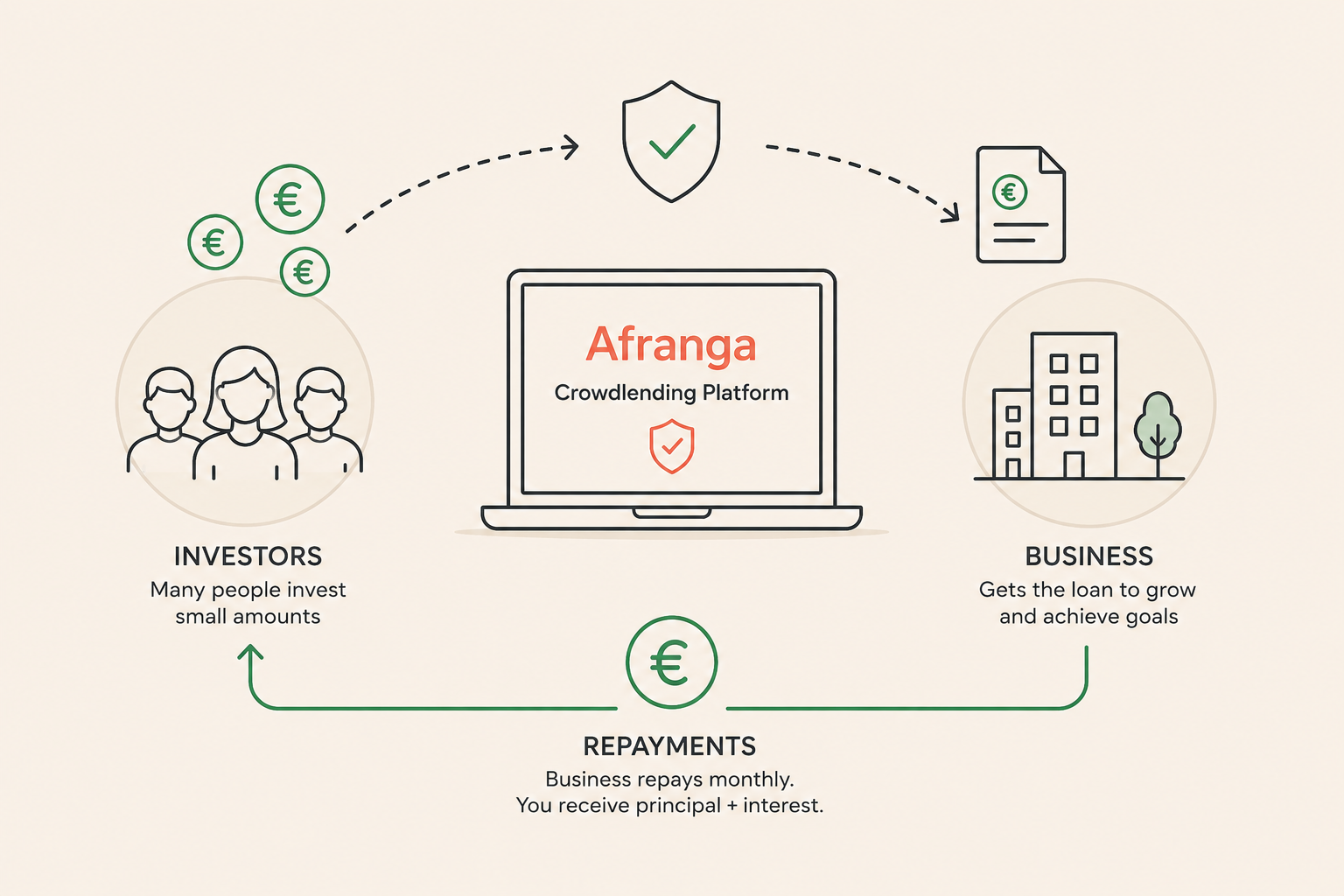
Afranga е изцяло платформа за краудлендинг (peer-to-peer кредитиране).
Вие винаги сте кредитор, а не дарител или акционер. Вие избирате кои заеми да финансирате, знаете лихвения си процент предварително и получавате фиксирани месечни вноски.
Как се сравнява краудлендингът с алтернативите
Повечето хора са запознати с два начина да накарат парите си да работят: спестовна сметка или фондова борса. Ето как краудлендингът се съпоставя и с двете:
Спестовни сметки: сигурни, но ограничени
При спестовната сметка банката взема парите ви и решава какво да прави с тях. Нямате контрол върху това къде отиват парите ви или на кого се отпускат като заем. Капиталът е защитен (до определен регулаторен лимит), но доходността е минимална – нищожна част от това, което банката печели, като отдава парите ви. Услугите и продуктите, предлагани от Afranga, не са част от европейска схема за гарантиране на депозитите и инвестираният капитал е изложен на риск.
Тази разлика е от значение, тъй като по-високата лихва при споделеното кредитиране е компенсация за поетия инвестиционен риск. Кредитополучателите плащат повече, за да получат достъп до по-бърз и по-гъвкав капитал, отколкото предлагат банките. Тази премия е това, което се превръща във ваша доходност.
Фондова борса: по-висока доходност, по-висока волатилност
Когато купувате акции, обикновено придобивате дял в компания. Резултатът ви зависи от цената на акциите, дивидентите и дългосрочната стойност на компанията. При споделеното кредитиране не купувате собственост. Вие финансирате кредит и очаквате погасяване съгласно условията по заема.
Споделено кредитиране: фиксирана доходност, вие избирате
При споделеното кредитиране вие избирате кои заеми да финансирате. Лихвеният процент е фиксиран и определен, преди да инвестирате. Получавате месечни вноски по главницата и лихвата през целия срок на заема.
Къде се вписва Afranga
Afranga е платформа за инвестиране в предложения за споделено кредитиране. Тя свързва инвеститори с компании, отпускащи заеми, чрез регулирана платформена среда. Тя проверява и публикува заеми, обработва всички парични потоци, събира погасителните вноски и управлява отношенията през целия срок на заема. Вие никога не контактувате директно с кредитополучателя.
Вашата роля е лесна: разглеждате наличните заеми, избирате къде да инвестирате и получавате месечни вноски по главницата и лихвата директно във вашата сметка в Afranga.
Основни изводи
- Краудфъндингът е общо понятие. Afranga е специфична платформа за споделено кредитиране (peer-to-peer) – вие заемате пари на компаниите, които отпускат кредити, и печелите лихва; не правите дарения и не купувате акции.
- За разлика от спестовната сметка, тук вие избирате кои заеми да финансирате, на кого давате парите си и при какъв лихвен процент – контролът е изцяло във ваши ръце.
- За разлика от акциите, доходността при споделеното кредитиране е фиксирана и определена предварително. Няма пазарна цена, която да се променя ежедневно.
- Споделеното кредитиране носи реален риск – кредитополучателите могат да изпаднат в неплатежоспособност. Ето защо лихвените проценти са по-високи, отколкото при спестовните сметки.
- Платформата (Afranga) е посредник: тя проверява кредитополучателите, структурира заемите и обработва погасяванията, но вие сте тези, които влагат своя капитал.
Кратък тест
Въпрос 1
Какъв вид краудфъндинг предлага Afranga?
А. Краудфъндинг чрез дялово участие — купувате акции в стартъпи
Б. Краудфъндинг чрез дарения
В. Краудлендинг (кредитиране) — заемате пари и печелите лихва
Г. Краудфъндинг чрез възнаграждение
Въпрос 2
По какво краудлендингът се различава от спестовната сметка?
А. Парите ви са 100% защитени и гарантирани от платформата
Б. Вие избирате кои заеми да финансирате и печелите по-висока фиксирана лихва
В. Няма разлика — и двете са безрискови
Г. Вие притежавате дял от компанията кредитополучател
Въпрос 3
Защо лихвените проценти при споделеното кредитиране (crowdlending) са по-високи, отколкото при спестовните сметки?
А. Защото платформите начисляват твърде високи такси на кредитополучателите
Б. За да се компенсират инвеститорите за реалния риск от неизпълнение на задълженията от страна на кредитополучателите
В. Защото на този пазар липсва регулация
Г. Защото правителството субсидира възвръщаемостта
Въпрос 4
Каква е основната разлика между споделеното кредитиране и инвестирането в акции?
А. Акциите винаги са по-сигурни
Б. Споделеното кредитиране ви дава право на собственост върху бизнеса на кредитополучателя
В. Доходността от краудлендинг е фиксирана предварително, докато доходността от акции варира според пазарните цени
D. Няма разлика в рисковия профил
