Статия 2 от 6
Проследете пътя на парите
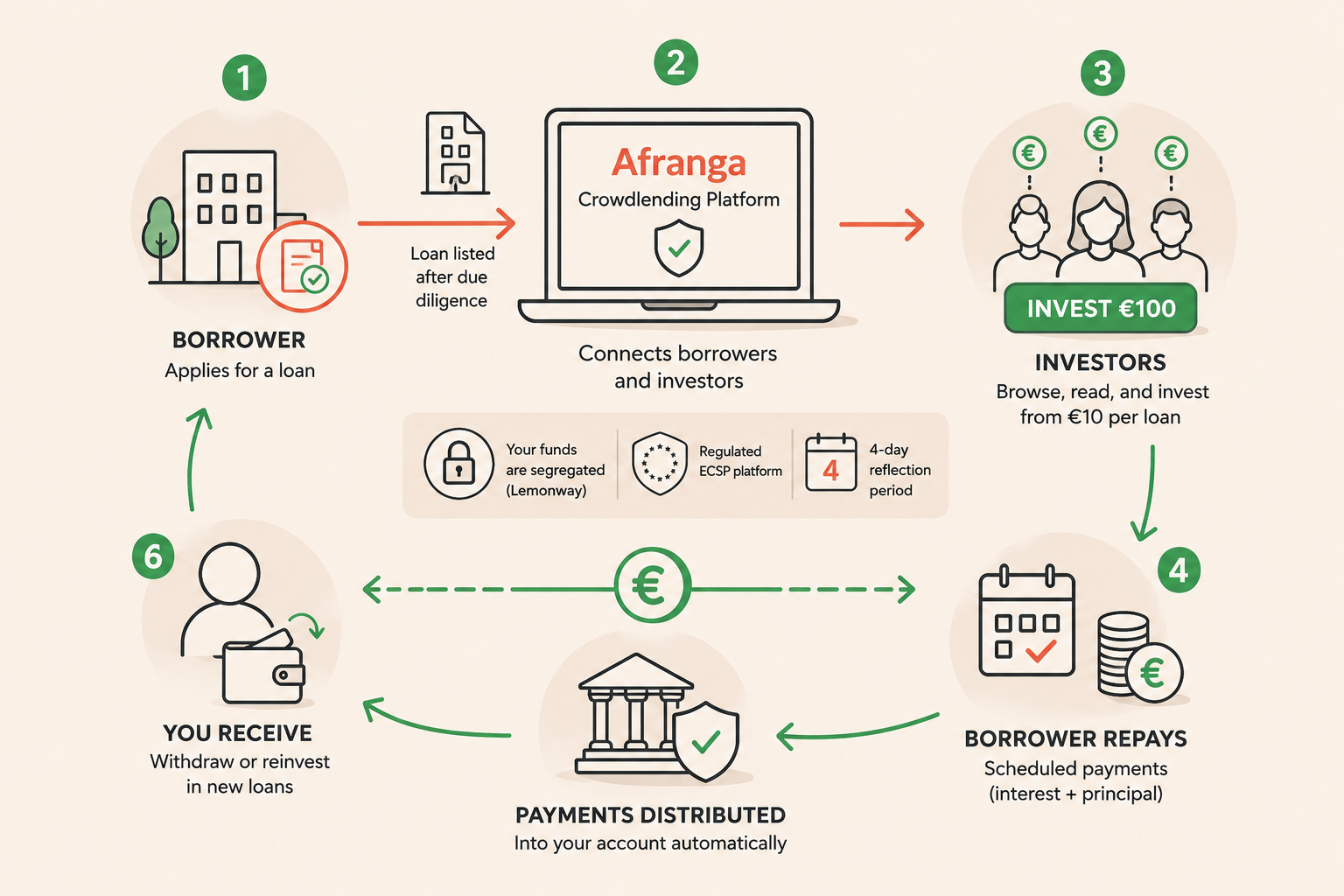
Натискате „Инвестирай 100 €“ в Afranga. Три месеца по-късно в сметката ви постъпва плащане. Но какво всъщност се случва през това време? Един заем е бил обявен, финансиран и погасен – а вие сте един от десетките инвеститори, които са направили това възможно. Тази статия проследява всяка стъпка от процеса.
Какво ще научите
- Каква е реалната роля на платформата за споделено финансиране
- Как обявата за заем се превръща в инвестиционна позиция.
- Как погасителните вноски се разпределят обратно към инвеститорите.
Платформата събира страните
Платформата за споделено финансиране (crowdlending) не е банка. Тя не приема депозити, не отпуска собствени средства и не поема кредитния риск в своя баланс. Вместо това тя действа като пазар: свързва кредитополучатели, които се нуждаят от капитал, с инвеститори, които разполагат с такъв.
Ролята на платформата е да направи възможността видима, да предостави подходяща информация, да подпомогне процеса на трансакция и да помогне на инвеститорите да проследят какво се случва след извършване на инвестицията.
Afranga е лицензиран европейски доставчик на услуги за споделено финансиране (ECSP), регулиран от Комисията за финансов надзор на България съгласно Решение 863/12.09.2023 г. Това означава, че платформата трябва да спазва строги правила относно проверката на кредитополучателите, информирането на инвеститорите, управлението на средствата и текущото отчитане.
Страната на кредитополучателя
Дадена компания кандидатства за заем. Платформата или, в някои случаи, партньорска кредитна компания, оценява финансовото състояние, правния статут, управлението и способността на бизнеса да погасява задълженията си. Това се нарича надлежна проверка (due diligence). Не всеки кандидат бива одобрен.
Ако бъде одобрен, заемът се публикува заедно с Ключов информационен документ за инвестицията (KIIS), изискван от регламентите на ЕС, който обобщава условията по заема, информацията за кредитополучателя и специфичните рискове. Задължително е да прочетете KIIS, преди да инвестирате.
Страната на инвеститора
Разглеждате наличните заеми. Четете всеки KIIS. Решавате колко да инвестирате. В Afranga можете да започнете от 10 € на заем – сума, достатъчно малка, за да разпределите парите си между много различни заеми (повече за това в Модул 2).
Когато ангажирате средства, парите ви се съхраняват в лична платежна сметка, управлявана от Lemonway – лицензирана институция за електронни пари, регулирана във Франция. Това се нарича сегрегация на средствата: вашите пари се държат отделно от оперативните средства на Afranga. Ако нещо се случи с самата платформа, вашите средства няма да бъдат засегнати.
Регламентите на ЕС също така предоставят на дребните инвеститори 4-дневен период за размисъл: след като се ангажирате с инвестиция, можете да промените решението си и да се откажете в рамките на 4 дни, без да дължите неустойки.
Погасявания
Кредитополучателят извършва планирани погасявания. В зависимост от заема, те могат да бъдат:
- Месечни или тримесечни анюитетни вноски, като всяка вноска включва част от лихвата и част от главницата. Парите ви се връщат постепенно.
- Периодични лихвени плащания с връщане на главницата на падежа (структура тип „bullet“), при която получавате лихви през целия период, а цялата главница се връща в края. Така работи Afranga.
Платформата разпределя тези плащания автоматично във вашата сметка. След това можете да изтеглите парите или да ги реинвестирате в нови заеми.
Когато заемът достигне своя падеж (края на договорения срок), получавате последното си погасяване. В този момент можете да изтеглите средствата или да ги реинвестирате.
Някои платформи предлагат вторичен пазар– място, където инвеститорите могат да продадат дела си от заема на друг инвеститор преди падежа. Това може да ви осигури по-ранен достъп до парите ви, но няма гаранция, че вторичните пазари ще бъдат ликвидни: трябва да се намери купувач, който желае да поеме позицията.
Този цикъл трябва да ви даде ясна представа: вие не давате пари на „черна кутия“. Вие финансирате конкретен заем за конкретен бизнес в рамките на регулирана среда с документирани условия.
Ключови изводи
- Краудфъндинг платформата е регулиран пазар, който свързва инвеститори и кредитополучатели; тя не отпуска собствени средства.
- Всеки заем е придружен от KIIS – документ с резюме на условията и рисковете, изискван от регламентите на ЕС.
- Средствата на инвеститорите в Afranga се съхраняват от Lemonway в отделни сметки, изолирани от оперативната дейност на платформата.
- Регламентите на ЕС предоставят на дребните инвеститори 4-дневен период за размисъл, в който могат да се откажат от инвестицията.
- Погасяванията могат да бъдат месечни, тримесечни или на падежа, в зависимост от заема.
Кратък тест
Въпрос 1
Какво означава сегрегация на средствата?
A. Всеки инвеститор има своя лична банкова сметка в Afranga
B. Средствата на инвеститорите се съхраняват от лицензирана платежна институция, отделно от оперативните средства на Afranga
C. Средствата на инвеститорите са застраховани от държавата
D. Средствата на инвеститорите се инвестират в общ фонд
Въпрос 2
Какво представлява KIIS?
A. Маркетингова брошура на платформата
B. Данъчна справка на инвеститора
C. Документ, обобщаващ условията и рисковете по заема, изискван съгласно регламентите на ЕС
D. Бизнес план на кредитополучателя
Въпрос 3
Може ли дребен инвеститор да се откаже, след като е потвърдил инвестицията си?
A. Не, всички инвестиции са окончателни
B. Да, в рамките на 4 дни съгласно регламента на ЕС
C. Да, но само срещу такса
D. Само ако заемът все още не е отпуснат
