Статия 6 от 6
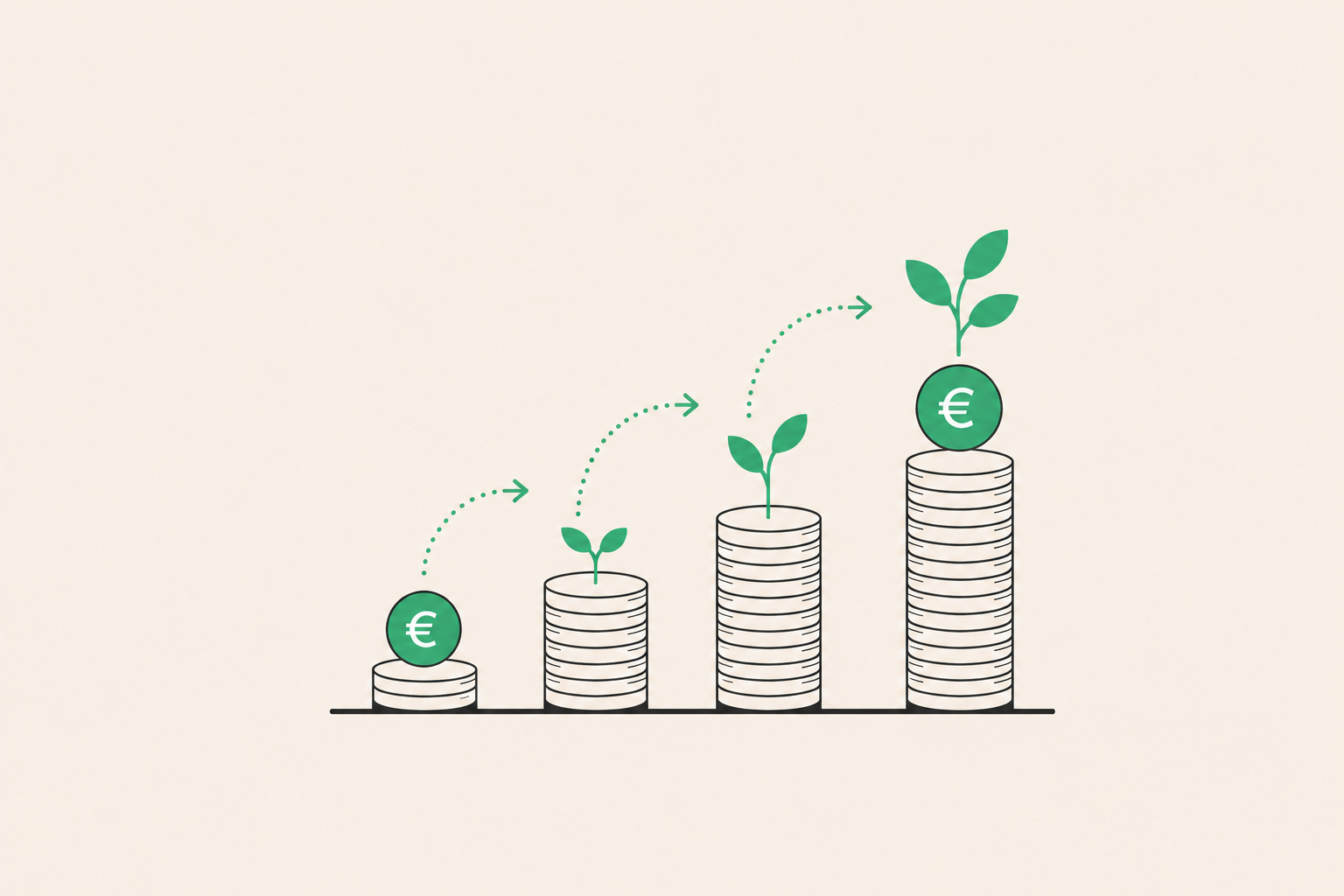
Снежна топка, търкаляща се по хълм, събира все повече сняг с всеки оборот. Започва малка. Докато стигне до подножието, тя е многократно по-голяма от първоначалния си размер. Сложната лихва работи по същия начин. Най-трудното е началото; най-силното е постоянството.
Какво ще научите
- Какво означава реинвестирането.
- Защо неизползваните пари в брой могат да намалят ефективната доходност.
- Защо сложната лихва е мощна, но не и гарантирана.
Реинвестирането означава да накарате изплатените суми да работят отново
Когато по заем се изплати главница или лихва, тези пари стават налични във вашата инвеститорска сметка. Реинвестирането означава да използвате тези получени средства, за да инвестирате отново, вместо да ги оставяте да стоят неизползвани.
Защо сложната лихва е важна
Сложната лихва се появява, когато доходността започне да генерира допълнителна доходност. При споделеното кредитиране това се случва, когато получените лихви и главници се използват за финансиране на нови заеми, които от своя страна генерират собствени плащания.
Ефектът може да стане значим с течение на времето, особено когато капиталът остава инвестиран и забавянето на паричните потоци е минимално. Забавянето на паричните потоци е разликата, която се създава, когато парите стоят неизползвани, вместо да бъдат инвестирани съгласно стратегията.
Защо малките, редовни инвестиции се натрупват
Не се нуждаете от голяма еднократна сума, за да работи сложната лихва. В Afranga можете да започнете от 10 евро на инвестиция. Тази достъпност е от значение: вноска от 50 или 100 евро всеки месец, реинвестирана с връщането на лихвите, изгражда цикъл на сложна лихва с течение на времето.
Това е едно от тихите предимства на модела на платформата. Плащанията се връщат във вашата сметка. Можете или да ги изтеглите, или да ги използвате за финансиране на нови заеми, които след това генерират собствена лихва, която от своя страна е налична за финансиране на следващия заем.
Факторът време
Сложната лихва възнаграждава търпението, а не уцелването на момента. Първите няколко месеца могат да изглеждат разочароващи – малки лихви, малки суми. Формата на кривата става очевидна едва след години. Това е част от причината финансовите експерти да говорят за времето на пазара, а не за опитите да се предвиди пазарът: при сложната лихва постоянството побеждава хитростта.
Честните предупреждения
Сложната лихва усилва резултатите. Това работи и в двете посоки.
- Когато кредитите се представят според очакванията, реинвестираната доходност расте по-сигурно, отколкото ако бъде изтеглена.
- Когато кредитите изпаднат в неизпълнение, реинвестираният капитал може да бъде загубен заедно с първоначалната главница. Сложната лихва не предпазва от кредитни загуби, тя просто усилва резултата от представянето на активите.
- Сложната лихва предполага, че продължавате да реинвестирате. Ако в даден момент новите кредити в платформата са оскъдни, част от парите ви може да останат в сметката ви без да носят доходност („кешово забавяне“), което леко забавя ефекта.
- Миналите резултати не са надежден показател за бъдещото представяне.
Дисциплинираният подход към сложната лихва изглежда така: инвестирайте суми, които можете да си позволите, диверсифицирайте в множество кредити, четете KIIS за всеки от тях, реинвестирайте при всяко погасяване и дайте на стратегията време. Без обещания, без прибързване, без преки пътища.
Основни изводи
- Сложната лихва означава да печелите доходност върху предишната си доходност – с времето парите ви работят по-ефективно.
- Малките, редовни инвестиции могат да се натрупат значително, ако се реинвестират търпеливо.
- Времето е по-важно от избора на момент. Кривата става по-стръмна, колкото повече време ѝ отделите.
- Сложната лихва усилва резултатите, включително загубите. Тя не е защита срещу риск.
- Диверсификацията, KIIS и реалистичните очаквания са основата. Сложната лихва е това, което градите върху тях.
Кратък тест
Въпрос 1
Какво представлява сложната лихва с прости думи?
A. Печелене на лихва само върху първоначалната ви инвестиция
B. Натрупване на лихва върху лихвата чрез реинвестиране на доходността
C. Теглене на печалбите всеки месец
D. Получаване на бонус от платформата
Въпрос 2
Кое е най-същественото предупреждение относно сложната лихва?
A. Работи само за суми над 1000 евро
B. Облага се с данък два пъти
C. Тя увеличава както загубите, така и печалбите, и не елиминира риска
D. Достъпна е само за напреднали инвеститори
Въпрос 3
Кое от изброените най-точно описва как работи сложната лихва при краудфъндинга?
А. Еднократно инвестиране на голяма сума и изчакване
Б. Редовно инвестиране, реинвестиране на вноските, диверсификация и търпение
В. Смяна на платформите всеки месец
Г. Теглене на лихвата веднага след получаването ѝ
